World-Class Architectural Models
Exemplary international projects illustrating the fusion of architectural innovation, spatial flexibility, social cohesion, and technological readiness.
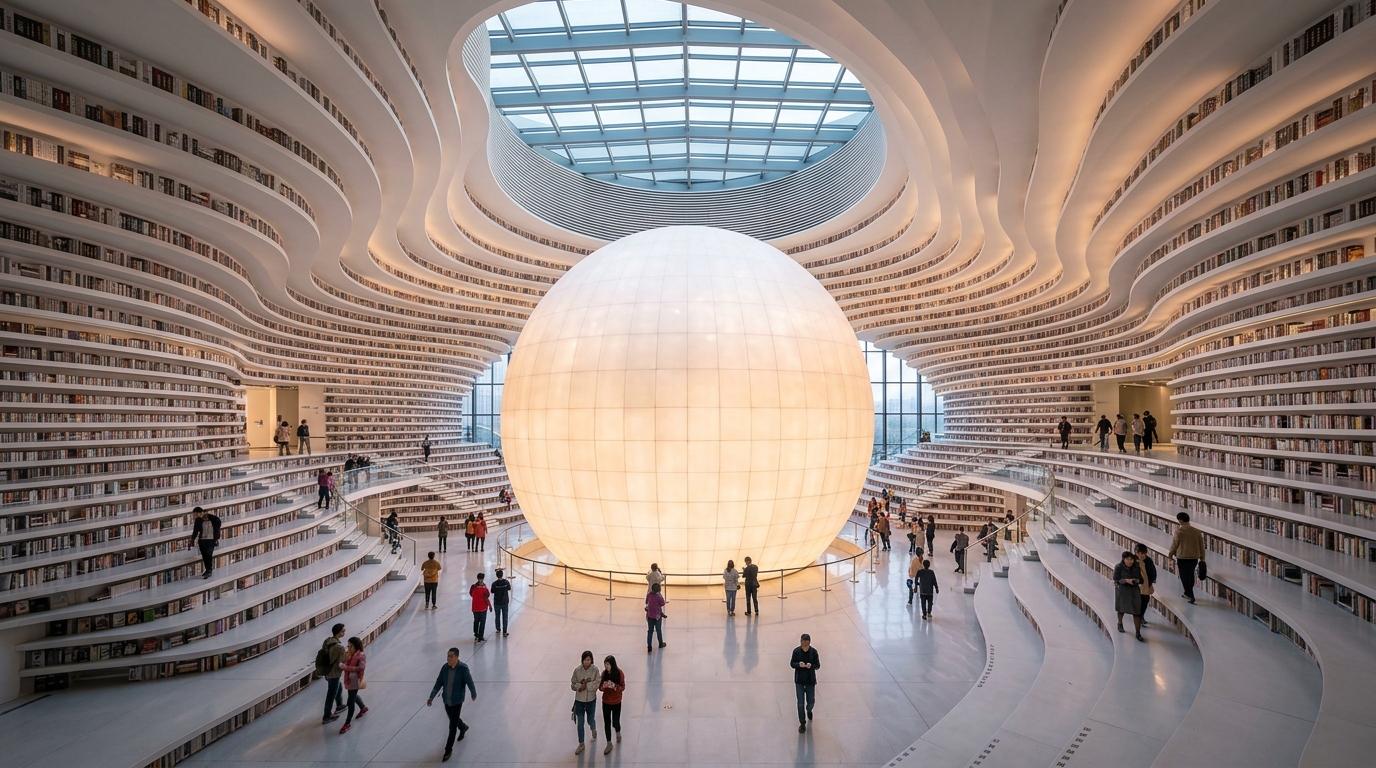
Tianjin Binhai Library: "The Eye"
Completed as a key cultural anchor for Tianjin, China, this futuristic library is celebrated for its organic, cave-like atrium. At its center rests a giant glowing spherical auditorium—"The Eye"—which reflects and opens up the surrounding environment.
- Continuous Topography: White, terraced bookshelves rise up the walls as multi-level stairs, seating platforms, and overhead louvers.
- Interactive Social Hub: The fluid structure integrates circulation, reading zones, and social gathering into a single, cohesive landscape.
- Visual Eye Centerpiece: A 3D spherical mirror auditorium provides an inspiring core focal point while housing a state-of-the-art auditorium.
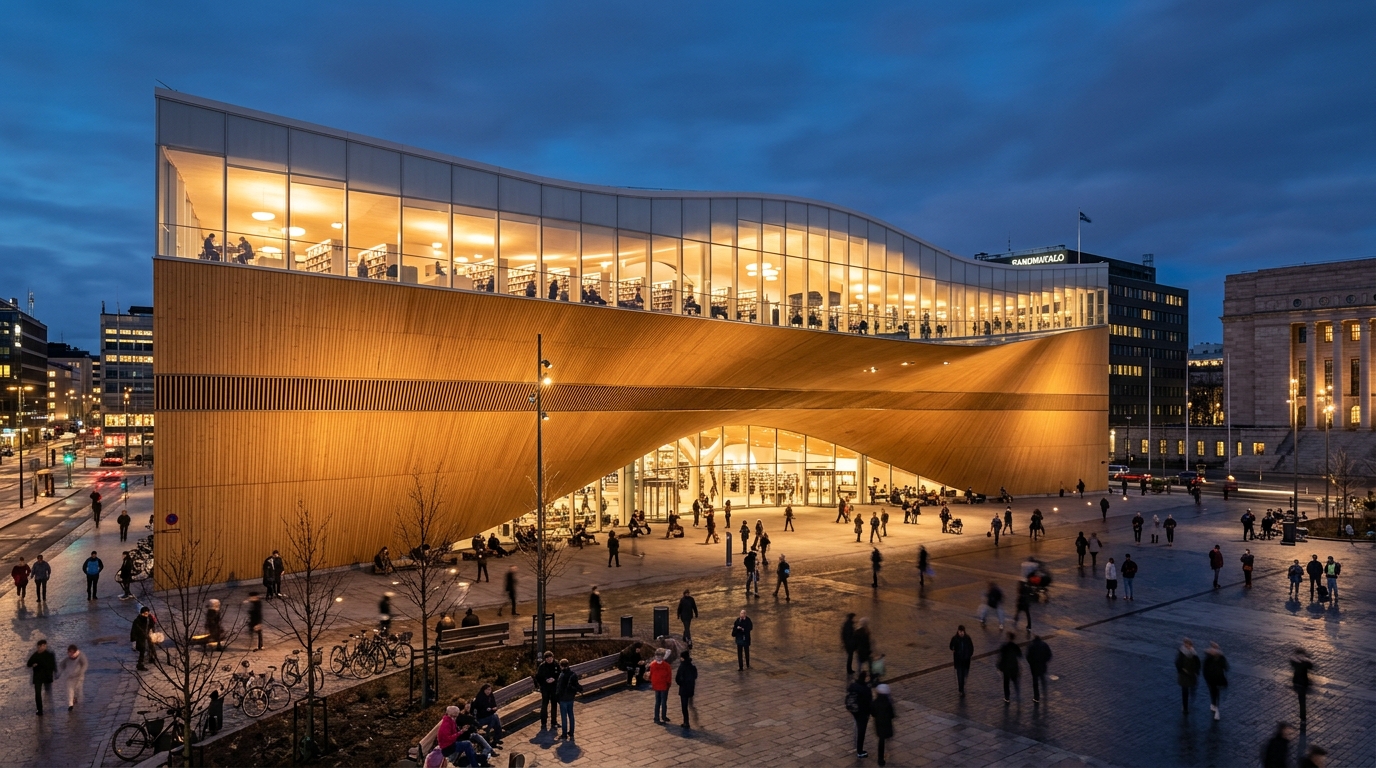
Oodi Helsinki Central Library
Designed as Helsinki's new central library, Oodi is a masterpiece of public infrastructure that serves as a community 'living room'. The structure is divided into three distinct thematic floors, prioritizing accessibility, active collaboration, and peaceful study.
- Tri-Level Functional Architecture: Ground floor for active cultural programs, middle floor for flexible maker/media spaces, and top floor ("Book Heaven") for serene reading.
- Sweeping Spruce Timber Facade: Built using local Siberian larch wood, the organic wave-like structure extends outward to create a covered public plaza.
- High-performance Sustainability: Employs advanced energy-efficient construction, local materials, and extensive natural glazing for optimal day-lighting.
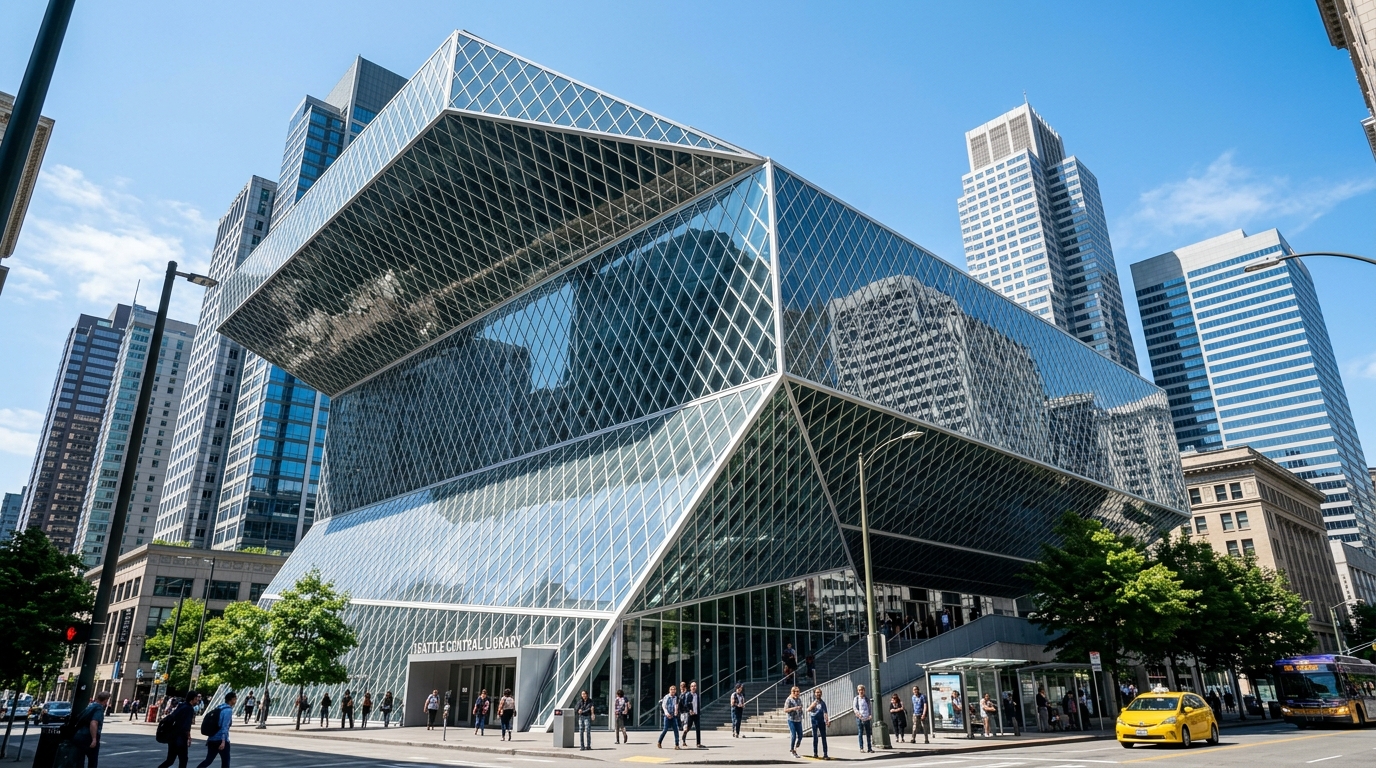
Seattle Central Library
Completed in 2004, the Seattle Central Library is a iconic civic landmark featuring a bold, faceted steel-and-glass exterior. It was conceptualized not simply as a traditional book repository, but as a dynamic, open-plan information hub optimized for digital and print media alike.
- The Books Spiral: A continuous 4-story ramped shelving loop that displays the entire non-fiction collection in a single, uninterrupted Dewey Decimal sequence.
- Five Programmatic Platforms: The shifting geometric envelope is defined by five distinct programmatic blocks (parking, staff, meeting, spiral, reading room).
- Structural Glass Skin: A diamond-mesh steel structure with translucent glass panels that flood the massive interior public spaces with natural light.
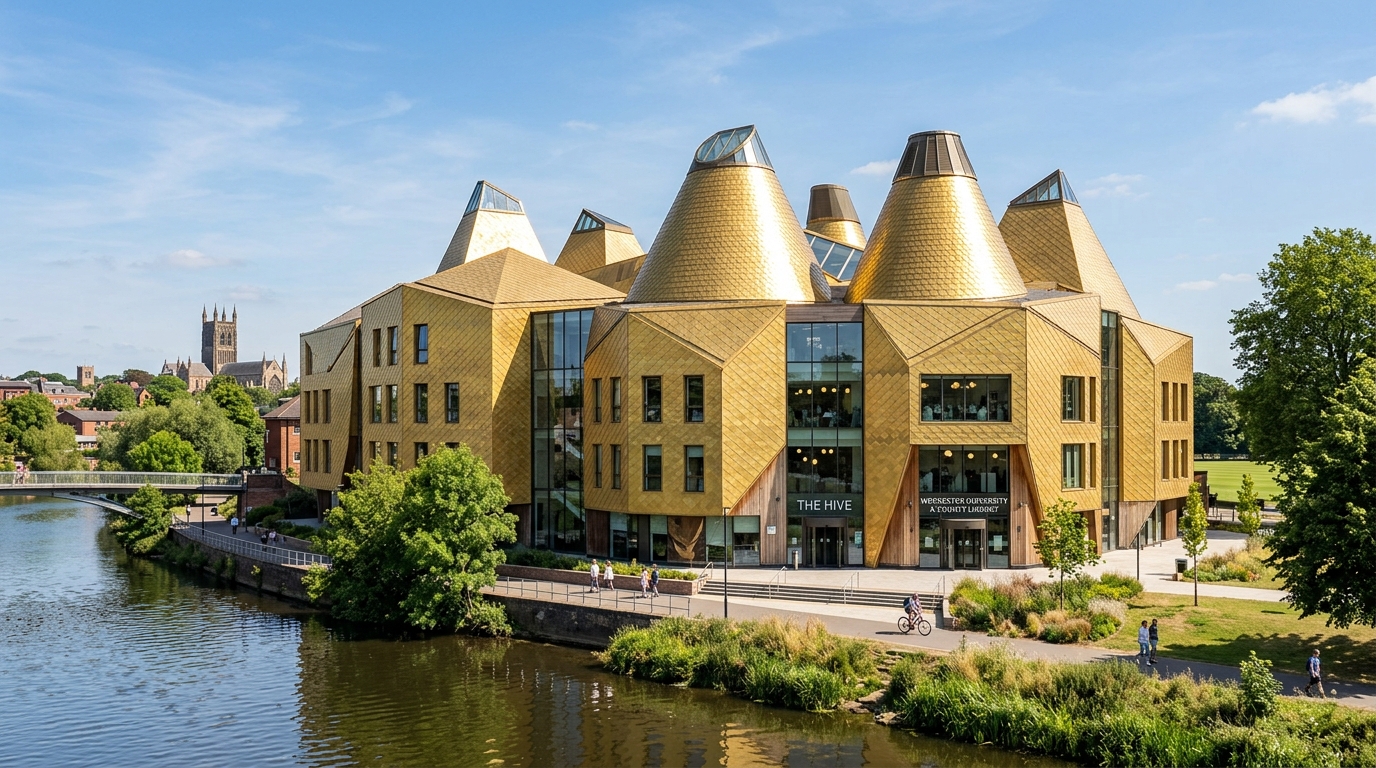
The Hive, Worcester
Opened in 2012, The Hive in Worcester is a pioneering facility functioning as the UK's first fully integrated public and university library. Its iconic gold-colored, pentagonal form stands as a leading global model for shared municipal-academic resources and high-performance sustainability.
- Integrated Multi-Service Hub: Houses an academic library, local public library, local archive center, and history registry within a unified public space.
- BREEAM Outstanding Sustainability: Highly eco-efficient design featuring passive natural ventilation cones, rain-water harvesting, and biomass heating.
- Striking Copper-Alloy Facade: Wrapped in a custom gold-alloy skin with sculptural roof cones that echo the historic local kilns and maximise natural daylighting.
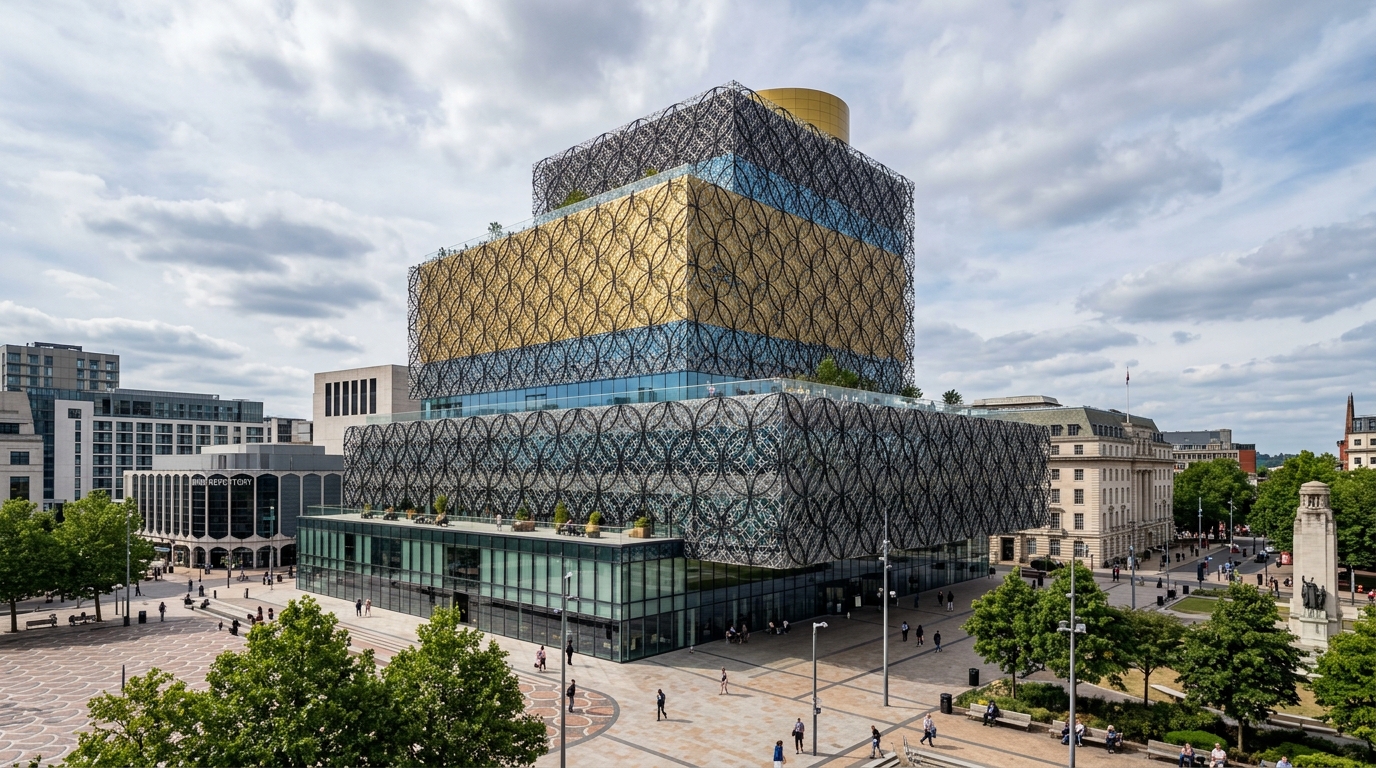
Library of Birmingham
Conceived as a 'People's Palace' by Mecanoo, the Library of Birmingham is a flagship 21st-century cultural landmark. The building is enveloped in an intricate aluminum filigree skin, representing the city’s rich industrial and craftsmanship history, while serving as a community hub for education and arts.
- Iconic Filigree Latticework: A stunning exterior metal skin featuring overlapping circular patterns that filters natural light and controls building temperature.
- Dynamic Public Spaces: Stacks of volumetric blocks housing terraced garden spaces, a historic Shakespeare Memorial Room, and massive circular glass rotundas.
- Civic Integration: Seamlessly connected to the Birmingham Repertory Theatre, linking academic study with live performing arts.
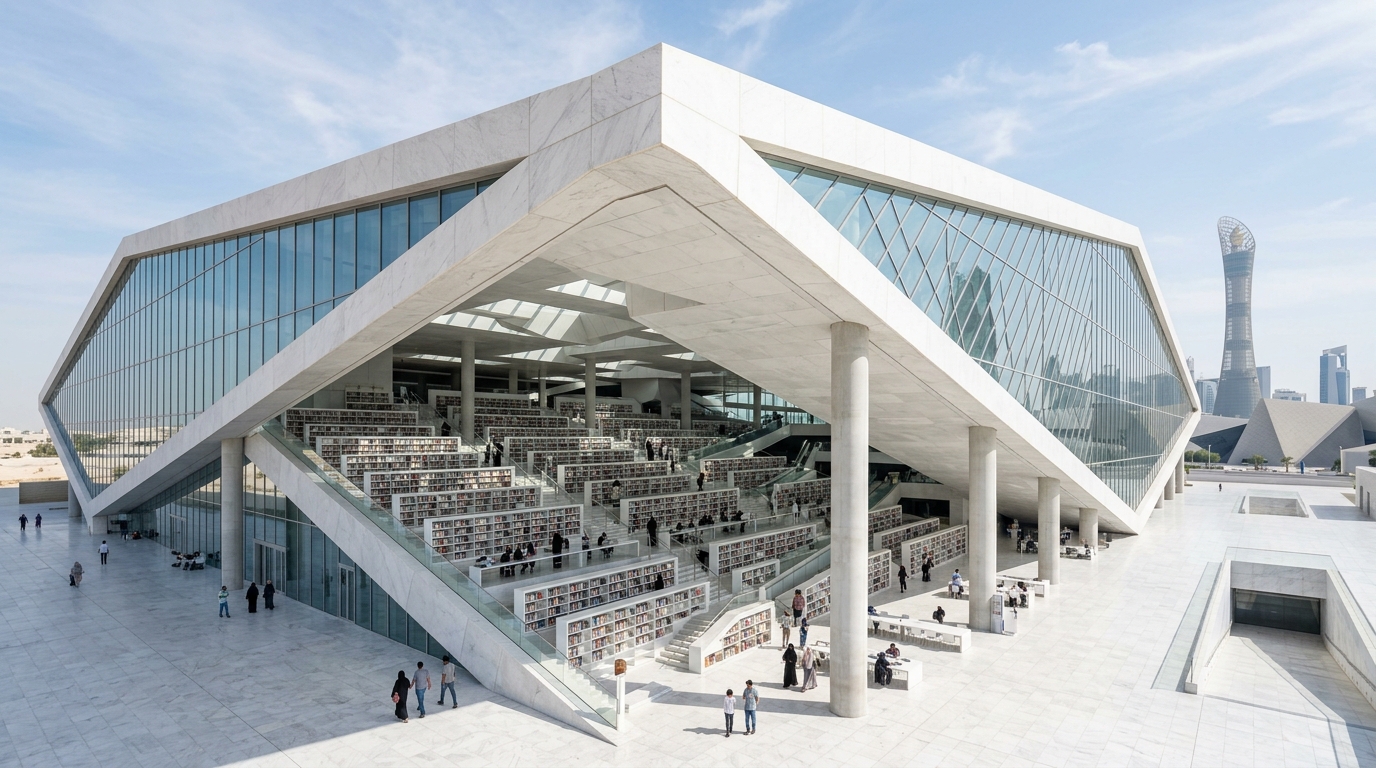
Qatar National Library
Designed by OMA in Doha's Education City, the Qatar National Library features a single, open-plan space structured around a concept of reading topography. Rather than separate floors, the edges of the building fold upwards to form shelves and seating tiers looking into a grand central plaza.
- Topography of Reading: Lifting structural corners creates ascending, tiered reading platforms integrated directly with the white marble bookshelves.
- Excavated Heritage Center: A central, 6-meter-deep open excavation clad in travertine houses the library's historical Islamic manuscripts.
- Unobstructed Spatial Flow: An expansive column-free environment that accommodates public, university, and national archives within a single hall.
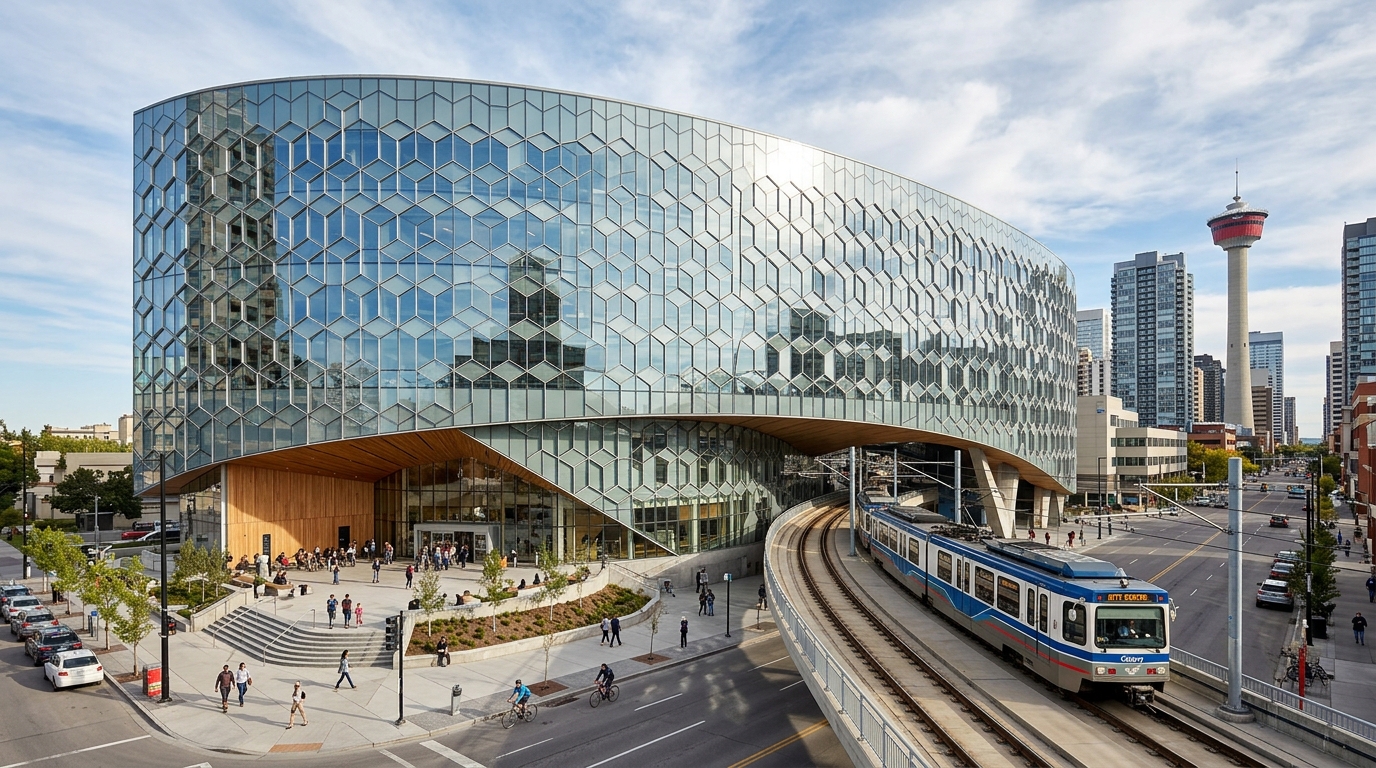
Calgary Central Library
Completed in 2018, the Calgary Central Library is a striking community anchor designed by Snøhetta and DIALOG. Built directly over an active light rail transit line, the building features an iconic hexagonal facade and acts as a physical bridge, reuniting divided downtown neighborhoods.
- Crystalline Hexagonal Façade: A distinctive glazed envelope featuring interlocking hexagonal panels that control solar heat gain and frame interior views.
- Hemlock-Clad Atrium: A sweeping, 85-foot-tall central wood atrium providing a warm, visually striking core that draws visitors upwards.
- Programmatic Spectrum: Spaces organized from active and playful public zones on lower floors to serious, quiet research tiers at the top.
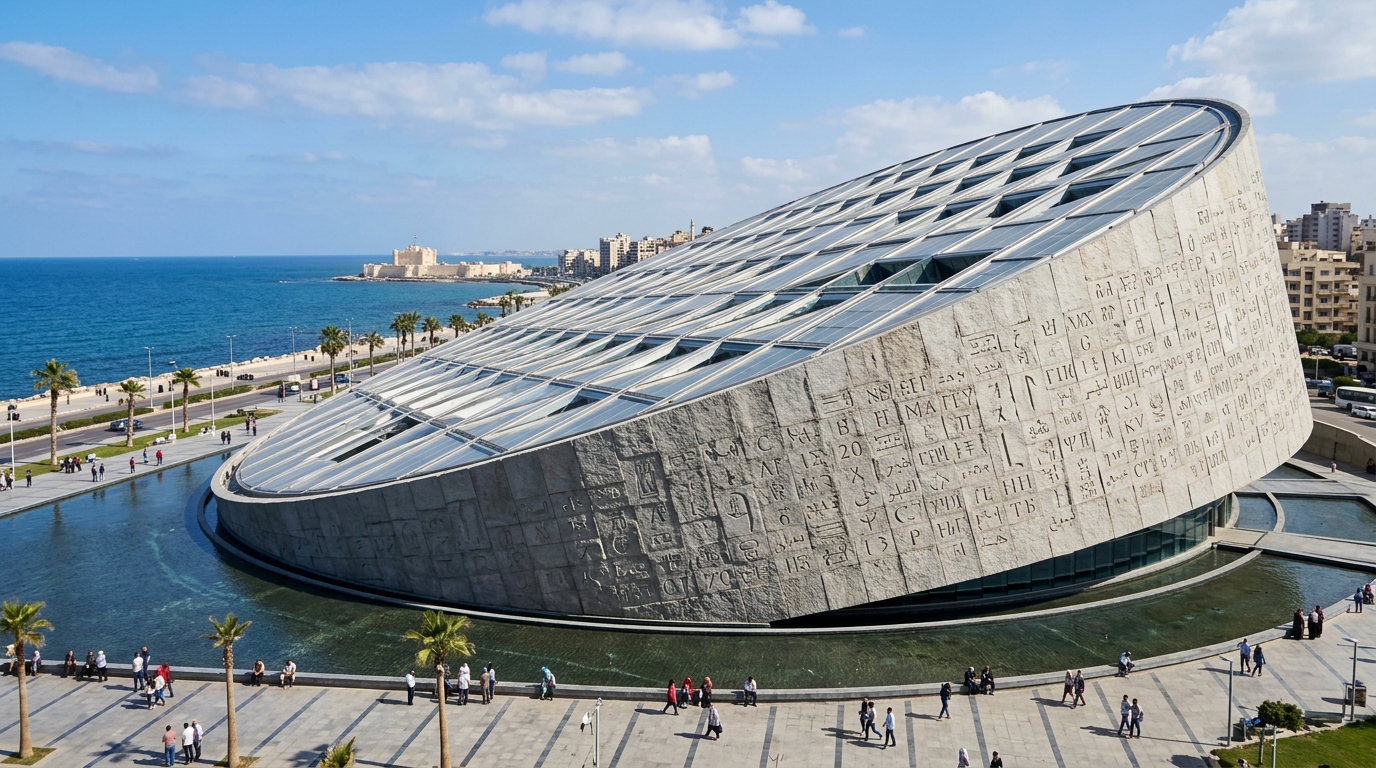
Bibliotheca Alexandrina
Inaugurated in 2002, the Bibliotheca Alexandrina is a modern commemoration of the ancient Library of Alexandria. Designed by Snøhetta as a universal circular form slanting towards the sea, the building symbolizes a rising sun of knowledge, marrying deep historic symbolism with cutting-edge academic infrastructure.
- Seven-Tiered Reading Room: A massive, 20,000-square-meter open hall arranged as a terraced amphitheater seating up to 2,000 readers.
- Carved Granite Facade: Clad in locally sourced Aswan granite, the exterior wall is etched with letters and characters from 120 different historical human scripts.
- Aga Khan Winning Design: Renowned for its social impact, reviving Alexandria's classical legacy as a major global academic and cultural epicenter.
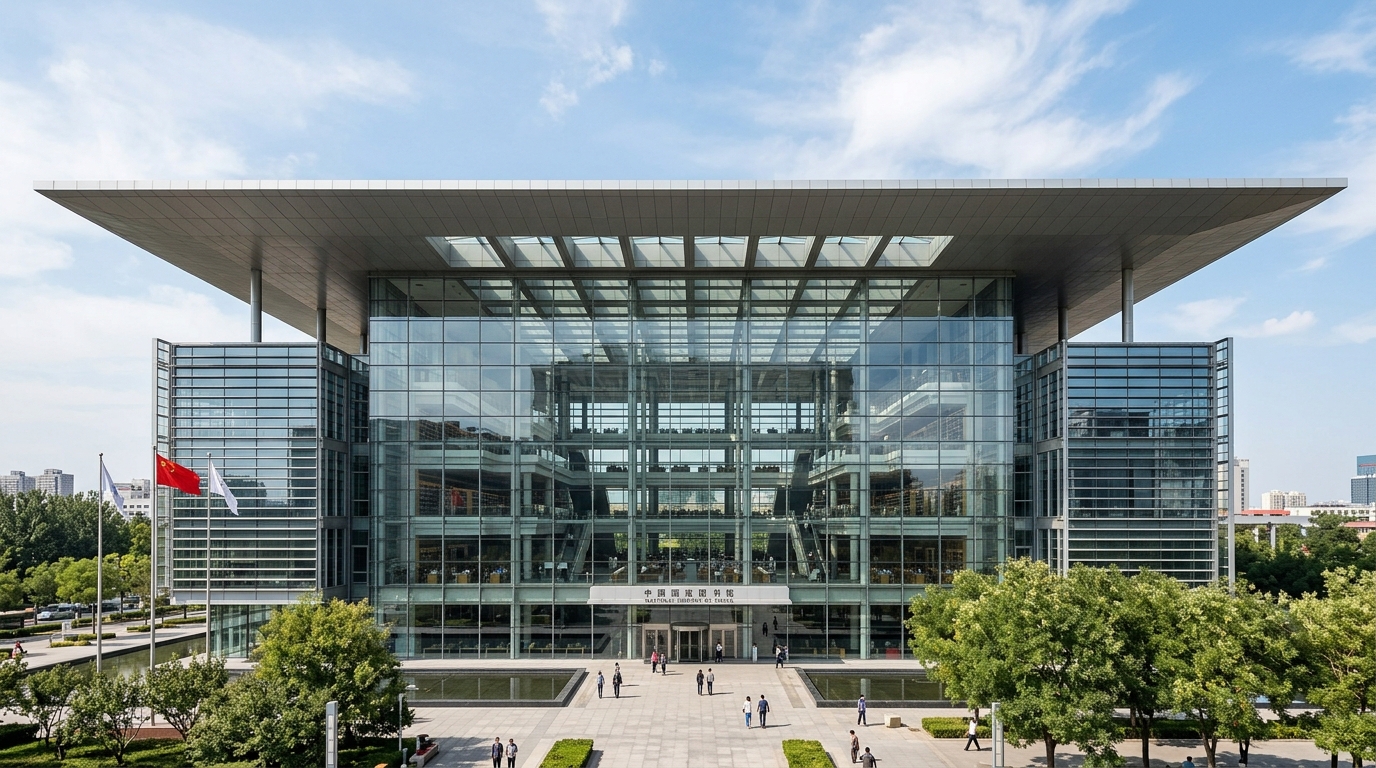
National Library of China
Completed in 2008, the expansion of the National Library of China in Beijing by KSP Engel is one of the largest libraries globally. Its design stands out through a horizontal composition that features a triad of elements—a podium, a transparent hall, and a giant floating roof—symbolizing the past, present, and future of Chinese writing culture.
- Podium & Transparent Hall: A robust base housing historic woodblocks and manuscripts, topped by a glass hall representing the present.
- Floating Digital Roof: A massive steel roof structure suspended over the hall, housing the digital library to represent the future.
- Horizontal Civic Contrast: Designed horizontally to provide a grounded, calm public space amidst Beijing's vertical, high-rise urban fabric.
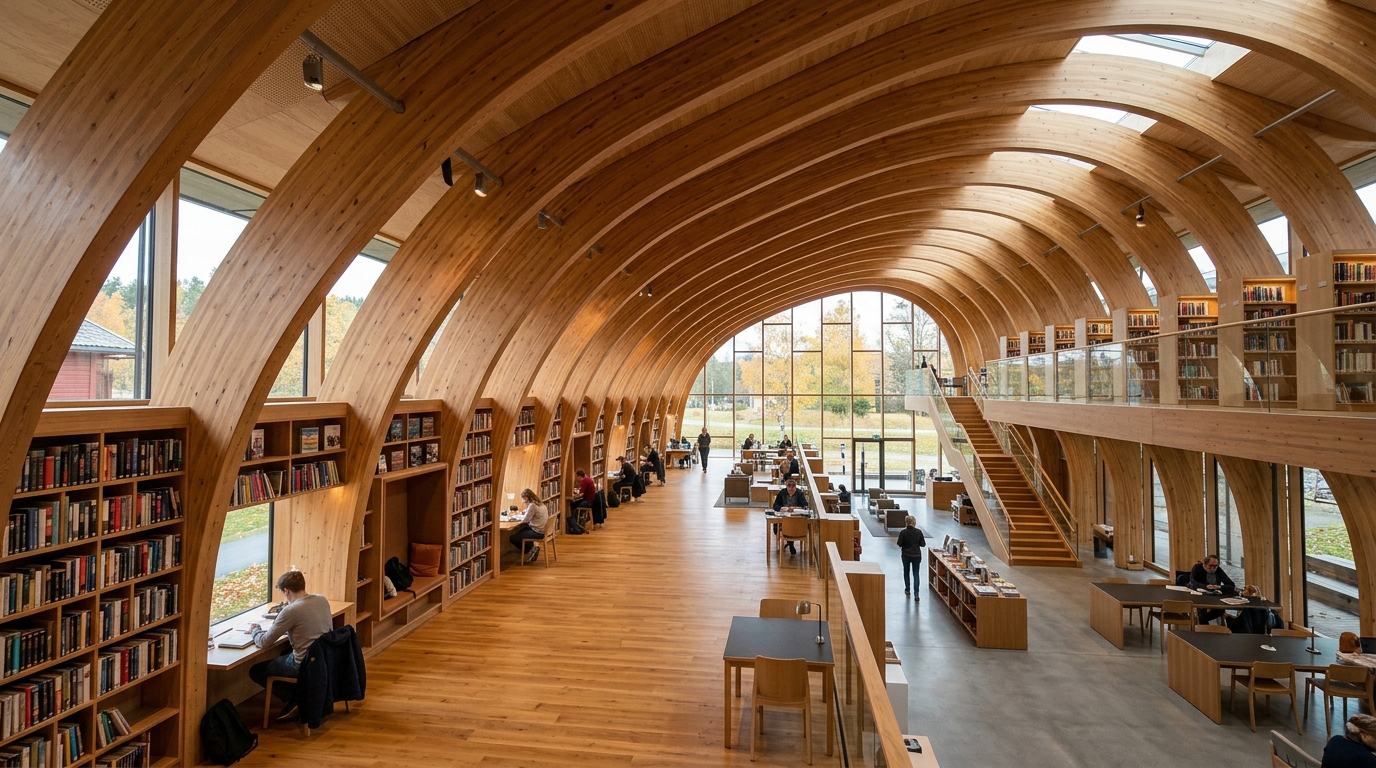
Vennesla Library & Culture House
Completed in 2011 in Norway, the Vennesla Library and Culture House by Helen & Hard is a landmark example of contemporary wooden architecture. The interior is framed by 27 rhythmic, glue-laminated timber arches that resemble a whale's skeletal structure, integrating structural support, shelving, and public seating into a single element.
- Multifunctional Timber Ribs: 27 structural glulam ribs that double as built-in bookshelves, acoustic panels, reading booths, and air ducts.
- Low-Energy Construction: An Energy Class A certified public building integrating high-efficiency geothermal heating and localized displacement ventilation.
- Connected Civic Space: Acts as a town center bridge linking learning centers, cafes, and existing cinemas into a lively public atrium.